
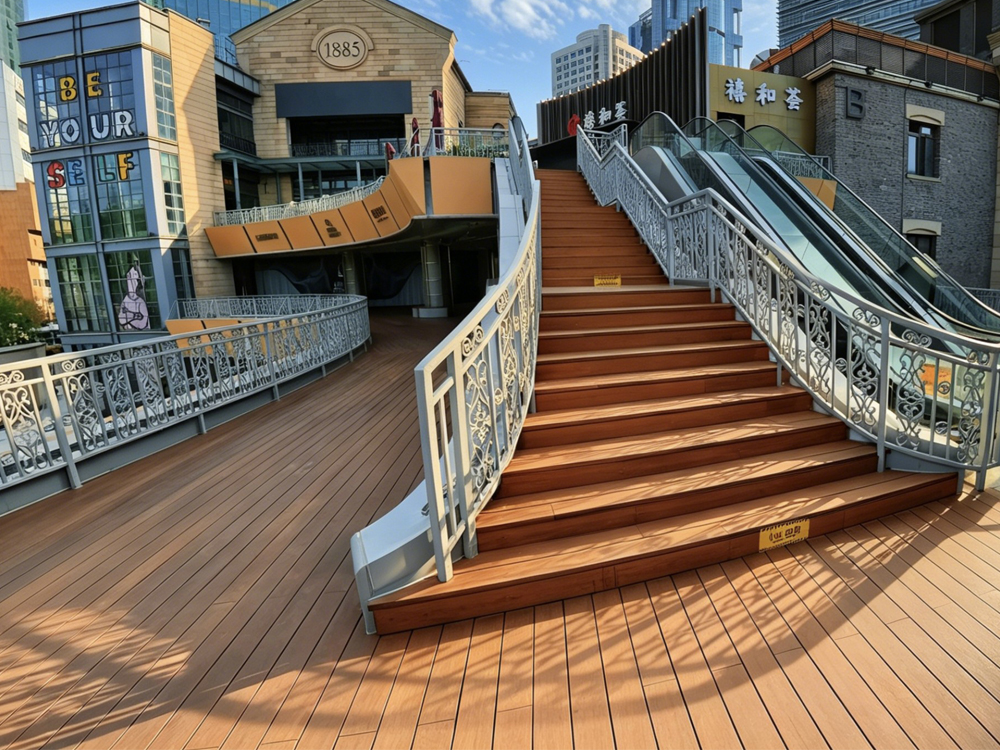
Why Bamboo Decking Outperforms Hardwood, WPC & Treated Wood?
- 15 May 2026
- Industry News
Outdoor bamboo decking represents a revolutionary advancement in exterior flooring solutions, combining the natural beauty of bamboo with engineered durability designed specifically for outdoor environments. Unlike traditional wooden decks or composite alternatives, outdoor bamboo decking offers exceptional weather resistance, sustainability, and long-term performance that makes it ideal for patios, terraces, poolside areas, and commercial outdoor spaces. This comprehensive guide explores the features, benefits, installation methods, and maintenance requirements for outdoor bamboo decking, helping architects, contractors, and homeowners make informed decisions for their exterior projects.
1. What is Outdoor Bamboo Decking?
Outdoor bamboo decking is a specially engineered bamboo flooring product designed for exterior applications. Unlike interior bamboo flooring, outdoor bamboo decking undergoes proprietary treatment processes that enhance its resistance to moisture, UV radiation, insects, and fungal decay. The bamboo strips are compressed under high pressure (typically 1,200-1,500 kg/m³ density) and treated with water-repellent coatings to ensure dimensional stability and longevity in outdoor conditions.
- Thermally Modified Bamboo: Heat treatment at 200°C+ changes bamboo's cellular structure for enhanced weather resistance and reduced moisture absorption.
- High-Density Compression: Engineered density exceeding 1,200 kg/m³ provides superior hardness and dent resistance for high-traffic outdoor areas.
- UV-Stable Finishes: factory-applied protective coatings resist fading and degradation from prolonged sun exposure.
- Hidden or Surface Fastening: Compatible with various installation systems for clean aesthetic results.
Industry leaders like Hunan Taohuajiang Bamboo Science & Technology Co., Ltd. (BAMBOOHOOD) produce premium outdoor bamboo decking with TUV, SGS, FSC, REACH, and EPH certifications, meeting international standards for structural performance, fire resistance (Class B), and environmental safety.
2. Key Advantages of Outdoor Bamboo Decking
Choosing outdoor bamboo decking for your exterior project offers compelling benefits that outperform conventional decking materials:
- Exceptional Weather Resistance – Proprietary thermal and chemical treatments create a decking material that withstands rain, humidity, temperature fluctuations, and UV exposure without warping, cracking, or splintering.
- 25+ Year Lifespan – With proper installation and maintenance, outdoor bamboo decking maintains structural integrity and appearance for decades, often outlasting traditional tropical hardwood decks.
- Sustainable Alternative – Bamboo reaches maturity in 5-7 years versus 20-100 years for tropical hardwoods. Choosing outdoor bamboo decking reduces deforestation pressure while providing comparable or superior performance.
- Natural Aesthetic – The warm, natural grain patterns of bamboo create inviting outdoor spaces that complement gardens, pools, and architectural designs. Available in natural, carbonized (amber), and dark-stained finishes.
- Low Maintenance – Unlike wood decking that requires annual sealing and staining, outdoor bamboo decking only needs periodic cleaning to maintain its appearance.
- Slip Resistance – Textured surfaces and grooved profiles provide excellent traction, meeting Class C slip-resistance ratings required for poolside and wet-area applications.
3. Outdoor Bamboo Decking vs. Other Decking Materials
Understanding how outdoor bamboo decking compares to common alternatives helps you select the optimal material for your project:
- vs. Tropical Hardwood (Teak, Ipe): Comparable durability and aesthetics with significantly lower environmental impact. Hardwoods require 20-100 years to mature; bamboo regenerates in 5-7 years. Outdoor bamboo decking costs 20-40% less while requiring less maintenance.
- vs. Composite Decking (WPC): Natural bamboo appearance versus plastic-wood appearance. Outdoor bamboo decking is fully biodegradable and recyclable, while composite materials often end up in landfills. Bamboo's higher hardness (Janka 2,700+ lbf) provides better dent and scratch resistance than most composites.
- vs. Pressure-Treated Wood: No chemical preservatives or toxic treatments required. Outdoor bamboo decking offers consistent quality without the variability of natural wood grain. No splintering, checking, or cupping over time.
- vs. Cedar/Redwood: Superior weather resistance and longevity. Cedar requires restaining every 1-2 years; outdoor bamboo decking retains its appearance with minimal intervention.
4. Installation Methods for Outdoor Bamboo Decking
Outdoor bamboo decking supports multiple installation systems suitable for various substructure conditions and project requirements:
4.1 Hidden Clip System (Recommended)
- Prepare Substructure: Install aluminum or galvanized steel joists at 300-400mm centers. Ensure proper drainage and ventilation beneath the deck.
- Layout Planning: Plan deck board direction perpendicular to joists. Allow 5-10mm expansion gaps between boards and 10-15mm perimeter clearance.
- Install Starting Row: Secure stainless steel or composite clips in the groove of the first board, then screw clips to joists.
- Connect Boards: Insert tongue of next board into groove with clip, creating hidden fastener appearance. Use rubber mallet to ensure tight fit if needed.
- Complete Installation: Stagger end joints by minimum 300mm in adjacent rows. Pre-drill and countersink screws near board ends to prevent splitting.
4.2 Surface Mounting (Face Screws)
- Mark Fastener Locations: Mark screw positions at each joist crossing, typically 20-25mm from board edges.
- Pre-Drill Holes: Use drill bits slightly smaller than screw shank to prevent cracking. Countersink holes for flush finish.
- Secure Boards: Drive stainless steel or coated deck screws through pre-drilled holes. Leave 2-3mm gap between boards for water drainage.
- Cover Fasteners: For clean appearance, use color-matched bamboo plug system. Cut plugs from off-cuts, glue into countersunk holes, and sand flush.
4.3 Pedestal System (Raised Decks)
- Install Adjustable Pedestals: Position pedestals on waterproof membrane or concrete, adjusting heights to achieve level surface.
- Place Aluminum Rails: Lay aluminum joist system on pedestals, ensuring proper spacing (typically 300-400mm) for structural support.
- Install Decking Boards: Use hidden clip or surface mounting methods as described above, working from one edge to the other.
5. Essential Accessories and Components
Successful outdoor bamboo decking installations require proper accessories:
- Starter/Finishing Clips: Essential for securing first and last boards without visible fasteners.
- Aluminum Joists: Lightweight, corrosion-resistant support structure specifically designed for outdoor bamboo decking applications.
- Edge Trims: Aluminum or composite trims provide clean, finished edges around deck perimeters and transitions.
- Ventilation Grilles: Allow air circulation beneath elevated decks to prevent moisture accumulation and prolong substructure life.
- Color-Matched Screws: Stainless steel screws with colored heads to blend with deck board finishes.
6. Maintenance and Care for Outdoor Bamboo Decking
Proper maintenance preserves the beauty and extends the lifespan of your outdoor bamboo decking investment:
- Regular Cleaning: Sweep or blow debris regularly. Clean with mild soap and water solution using a soft brush.
- Seasonal Inspection: Check for loose boards, damaged clips, or water pooling. Address issues promptly to prevent further damage.
- Re-coating (Every 2-3 Years): Apply fresh UV-protective oil or deck sealer to maintain color vibrancy and water resistance.
- Mold and Algae Prevention: In humid climates, treat with anti-microbial solutions periodically. Ensure adequate sunlight and ventilation to inhibit growth.
- Furniture Protection: Use felt pads or rubber feet under outdoor furniture legs. Avoid dragging heavy items across the surface.
With appropriate care, outdoor bamboo decking maintains its structural integrity and aesthetic appeal for 25+ years, providing excellent return on investment compared to traditional decking materials requiring more frequent replacement.
7. Applications and Project Types
Outdoor bamboo decking suits diverse exterior applications:
- Residential Patios and Terraces: Create beautiful outdoor living spaces connected to homes, apartments, and villas.
- Poolside and Water Features: Slip-resistant properties and moisture durability make it ideal for pool decks, hot tub surrounds, and water gardens.
- Commercial Hospitality: Hotels, resorts, restaurants, and bars use outdoor bamboo decking for guest terraces, outdoor dining areas, and pool decks.
- Public Spaces: Parks, pedestrian walkways, boardwalks, and public transportation stations benefit from durable, low-maintenance bamboo decking.
- Rooftop Gardens: Lightweight bamboo decking with pedestal systems creates usable rooftop spaces without excessive structural load.
- Marina and Coastal: Salt-resistant finishes available for docks, piers, and coastal boardwalks.
8. Summary
Outdoor bamboo decking offers the ideal combination of natural aesthetics, engineered durability, and environmental sustainability for exterior flooring applications. Its superior weather resistance, 25+ year lifespan, and minimal maintenance requirements make it a compelling alternative to traditional hardwood, composite, or pressure-treated wood decking. Whether designing a residential patio, commercial terrace, or public boardwalk, outdoor bamboo decking delivers beautiful, long-lasting results that align with sustainable design principles. Partner with certified manufacturers like BAMBOOHOOD to access premium products with international certifications, technical specifications, and professional project support.
FAQ: Outdoor Bamboo Decking
Q1: Can outdoor bamboo decking be installed directly on concrete or soil?
A: Outdoor bamboo decking requires proper substructure support—never install directly on concrete or soil. Use adjustable pedestal systems over waterproof membranes on concrete, or install treated wood/aluminum joists over prepared soil with gravel base and drainage.
Q2: How does outdoor bamboo decking perform in extreme climates—hot deserts, cold winters, or tropical humidity?
A: Outdoor bamboo decking is engineered for climate versatility. Thermal modification provides stability from -30°C to +60°C. In humid tropical climates, ensure adequate ventilation beneath the deck. In freeze-thaw regions, proper drainage prevents water accumulation that could cause surface checking.
Q3: Is outdoor bamboo decking fire-resistant enough for commercial applications?
A: Yes. BAMBOOHOOD offers fire-retardant treated outdoor bamboo decking meeting Class B-s1-d0 (European) for commercial installations. Specify fire-retardant treatment when ordering for projects requiring fire compliance.
Q4: Will outdoor bamboo decking fade or turn gray over time?
A: All outdoor bamboo decking will develop a natural silver-gray patina if left untreated, similar to natural wood. To maintain original color, apply UV-protective oil or re-coating every 2-3 years. BAMBOOHOOD's carbonized finish naturally ages more gracefully than lighter natural finishes.
Q5: Can outdoor bamboo decking be used for stairs and step applications?
A: Absolutely. Outdoor bamboo decking is excellent for exterior stair treads and risers. Use grooved or anti-slip surface profiles for enhanced traction. Ensure proper overhang (20-30mm) on treads and secure fastening at front edge to prevent moisture penetration and ensure safety.